
Science Curriculum Framework
The philosophy of the Science (Primary 1 to Primary 6) curriculum is as follows:
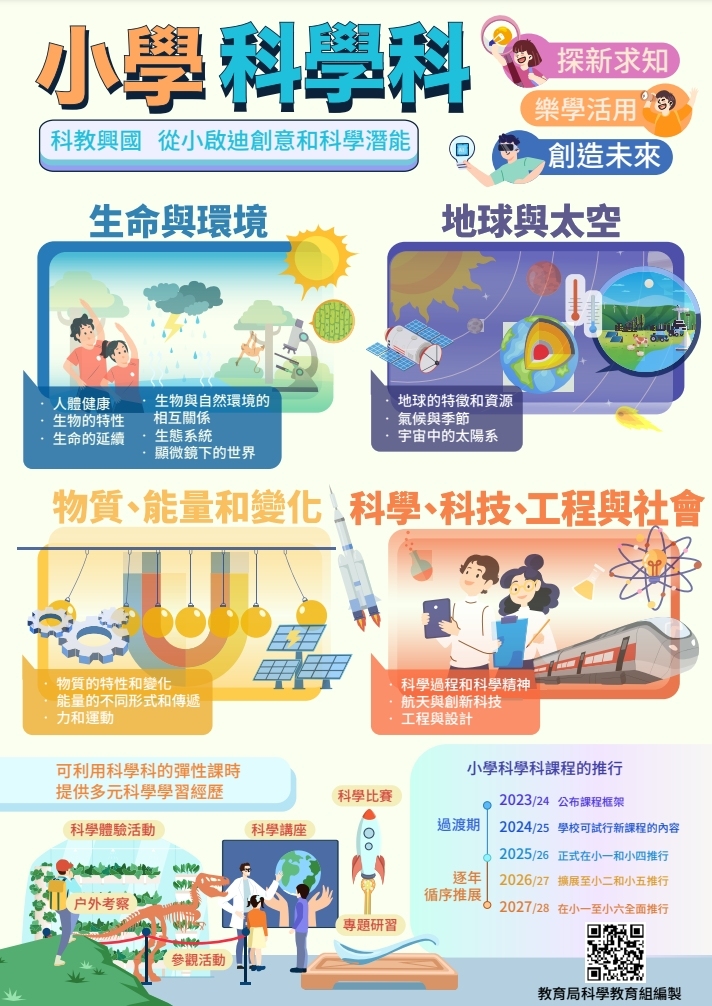
Exploring the New and Seeking Knowledge
Science education emphasises exploring the new and seeking knowledge, with a strong focus on cultivating students’ curiosity and spirit of inquiry. Science is a process of exploring the surrounding environment and phenomena. By nurturing students’ curiosity about the world and their desire for knowledge, their interest and motivation in learning can be stimulated, their self-directed learning ability developed, and they can become active knowledge seekers and problem solvers. Through the process of raising questions and finding answers, students understand the principles behind scientific phenomena, cultivate evidence-based scientific thinking, and develop logical reasoning skills.
Joyful Learning and Application
The philosophy of joyful learning and application emphasises a “student-centred” approach, providing opportunities for students to learn science happily and apply what they have learned. Science learning should align with students’ interests and needs. Through lively and interesting teaching methods and “hands-on and minds-on” inquiry activities, supplemented by diversified learning experiences beyond the classroom, students develop interest in science and innovative technology. Furthermore, by connecting classroom learning with students’ daily life experiences and real-life contexts, students can appreciate the application of science and technology in everyday life, apply the scientific knowledge they have learned to solve authentic problems, and cultivate practical and problem-solving abilities.
Creating the Future
Science and technology are advancing rapidly and play a positive role in driving social development and improving people’s quality of life. Through diversified science/STEAM learning, we cultivate students’ creativity and innovative thinking, so as to nurture future scientists, engineers, and entrepreneurs in innovative technology. They will be able to propose innovative ideas, solve challenging problems, and bring positive changes to society, contributing to our country and Hong Kong. The rapid development of society also brings new challenges. We encourage students to pay attention to sustainable development issues such as environmental conservation and climate change, and to cultivate a sense of responsibility towards society. By integrating creative thinking into science learning, students will be better prepared for the future.